
How To Fight Against Manipulated Reality
Documenting the truth safely in 2026


Hey friends,
In 1992, I took to the streets for the first time to scream “No justice, no peace.” I was in high school. I had seen what millions of us had seen caught on video: the police beating of Rodney King. That footage moved people to march. It moved me.
A kid in high school today is living through something both familiar and different. Injustice is still roaming the lands. But now federal agents are snatching neighbors out of their homes and workplaces. AI is being used to fabricate what we see. Surveillance through government and corporate means tracks our every move, digital and physical. And our own government is manipulating what we see to give us a false sense of reality itself.
Being a witness is an active process. And if we’re going to keep going through this kind of nonsense, we might as well get good at it.
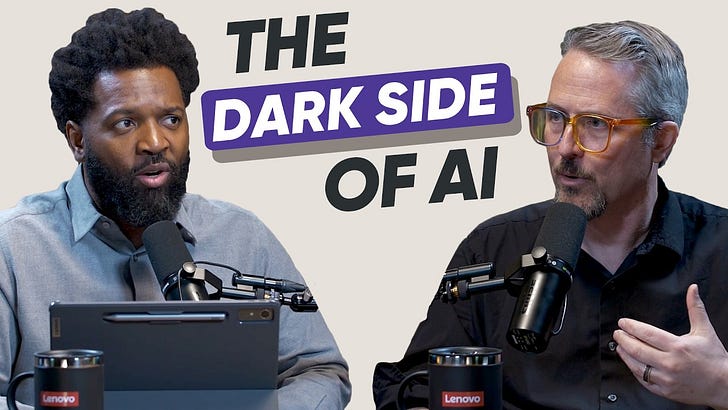
I sat down with Sam Gregory, executive director of WITNESS, an organization that has been training human rights workers to document abuse since the Rodney King video. Sam has spent years warning that we were headed toward a moment of low trust, abundant disinformation, and mass confusion about what’s real. We’re in it.
This episode covers how to witness safely, responsibly, and usefully:
How to assess your personal risk before you film
How to secure your device
How to capture footage that holds up
How to share without spreading harm
And why, even when justice feels far away, the act of witnessing matters
One thing Sam said that has stayed with me:
“We’re building archives of accountability so that justice may be served someday in the future.”
That can sound pessimistic. I hear it as hopeful. Someone in a lifetime before yours made that kind of commitment. It didn’t pay off for them. It paid off for you.
Watch the full episode below →
Sam is an extraordinary resource and we’ve gone deep with him twice before on AI, deepfakes, and the global dimensions of this work. If you want more:

Stay free,
- Baratunde
Thanks to the entire Life With Machines team, especially Layne Deyling Cherland and Alie Kilts for editorial and production support.
Dear Baratunde,
Great piece!
Love this: "That can sound pessimistic. I hear it as hopeful."
Thank you for sharing!
Love
Myq
This is very old thought. I have identified both with Spinoza’s impersonal panentheism as well as Martin Buber’s relational sacred respect among us and nature. I hold both at the same time. Einstein respected Spinoza and corresponded with Buber. In any way does this thought bear upon what you do? May be a door for me. Maybe. Maybe not.