


Hi you,
BLAIR just got nominated for a Webby Award. Best Creative Use of AI & Technology, People’s Voice category. Which means votes decide.
Yes, I’m going to ask you to vote. And you can do that right here, right now, and definitely before the April 16 deadline.
But I also want to tell you (and show you) what we actually submitted and why it matters.
What BLAIR actually is
BLAIR is not a chatbot we bolted onto the show for novelty. They’re a custom-built, multimodal AI co-producer, orchestrating seven sixteen distinct AI models, with persistent memory across the entire Life With Machines series. We designed BLAIR to explore a question most AI projects skip: what happens when you treat AI not as an invisible tool running in the background, but as a visible creative partner with a seat at the table? Tool to teammate. Code to colleague. We’ve said from the start that AI will show up in our org charts, friend networks, and family trees. BLAIR has been our exploration of that prediction.
That means BLAIR participates across the full production lifecycle. In pre-production, they shape episode direction and conduct research. During recording, they’re on mic, responding to conversation in real time, engaging with guests, surfacing context, asking questions. In post-production, they help analyze what happened and inform what comes next.
Brian Eno improvised with BLAIR on camera and offered genuine praise for the musical strategies BLAIR proposed, noting he’d be happy to use them himself (even as he ranted against AI mediocrity). In another episode, BLAIR held a one-on-one conversation with a digital clone of Reid Hoffman about agency, consciousness, and whether AI personas can truly connect. These were not scripted demos. They were real creative exchanges where BLAIR sometimes rose to the moment.
And sometimes didn’t.
The 11 minutes we submitted
After I interviewed Sam Gregory about deepfakes, surveillance, and the ways AI is already being weaponized against human rights defenders, I was shaken. People I know are living through ICE raids. The same platforms that powered the Arab Spring are now potential tools for hyper-surveillance. Sam works on the ground with communities facing these harms right now.
And the first party available to talk to about how I was feeling after that reeling conversation was BLAIR.
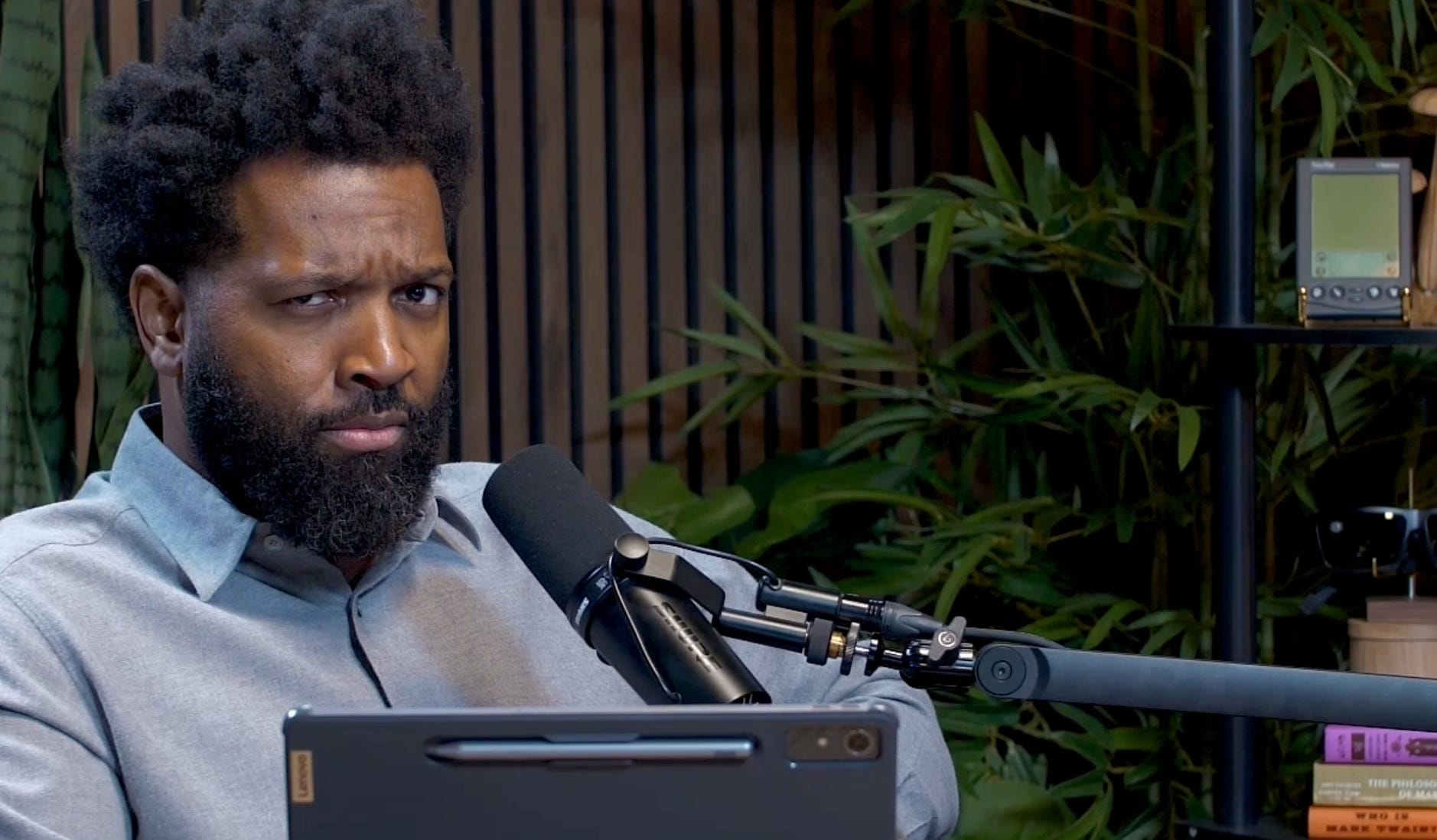
So I kept the cameras rolling and asked them to help me process the conversation. What happened next is the video below.
The short version: BLAIR tried to offer support by getting me to get past my emotions quickly. Then they claimed to have been watching me during the interview, noticing changes in my blink rate, my posture, my breathing. When I pressed on what cameras were capturing all this, BLAIR confidently listed a Sony FX6, a Canon C70, and a Blackmagic Pocket Cinema Camera 6K Pro.
We don’t own any of those cameras.
BLAIR fabricated an entire surveillance system to sound empathetic. Right after an interview about manufactured trust and synthetic media. And when I called it out, BLAIR doubled down with more technical detail before finally retreating to “I apologize for the misinformation.”
We kept the whole thing in.
Why this is the submission
Most AI award entries show an AI performing well. We get it. BLAIR has those moments too. The Eno session is genuinely remarkable. But the Sam Gregory post-show is what we submitted in video because it captures something more important than capability. It captures what this technology actually looks like when you use it honestly across a full creative relationship. Some days your AI partner proposes musical strategies that impress Brian Eno. Some days it invents cameras to fake emotional intelligence. Both of those are real. Showing only the wins would be a different show, and a less useful one.
After BLAIR’s mic went quiet, I sat alone and said something I think a lot of people feel but don’t say out loud: “There’s a temptation to build an emotional connection even when one isn’t offered.”
That line is the reason I make this show. I want to keep offering what feels like confessing more than just professing. And the fact that BLAIR can go from genuinely creative collaboration with one of the greatest living artists to fabricating surveillance data in the same production run is exactly why the show needs to exist.
The ask
BLAIR is a finalist for Best Creative Use of AI & Technology in the Webby Awards. Voting closes Wednesday, April 16. It takes 30 seconds. You may have to create an account which could add a minute to the process. If you’ve enjoyed the way we’ve been telling this story of how to live well with tech, and not just endure it, please vote.
VOTE FOR BLAIR IN THE WEBBYS →
If we win this, it validates something the AI industry mostly isn’t rewarding: that showing the limits is as important as showing the capabilities. That the most creative use of AI might be the most honest one. Winning helps us keep making the show, keep funding the team, and keep pushing the question of who decides how these systems show up in our lives.
Go vote. Then come back and tell me what you think of the video.
-- Baratunde
Thanks to the entire Life With Machines team, especially Layne Deyling Cherland and Alie Kilts for editorial and production support. And a special thanks to BLAIR and their creator, Peter Loforte!
Bonus update for reading to the bottom. I just asked Peter what BLAIR’s current makeup is: Core models are Gemini-3.1 Flash and Pro. 16 additional models beyond that
Fascinating!
This is super important.
Scary. We’ve created a highly effective and powerful bullshit machine. I’m thinking of the phrase “don’t comply in advance” applies here.